
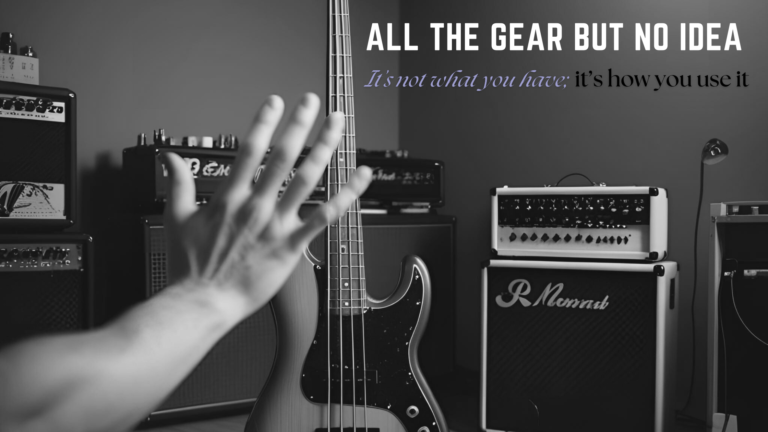
We’ve all been there. Excited about playing bass, maybe as a beginner, you spend months researching, debating, and finally drop a small fortune on a high-end bass. It arrives, brand new, the smell of lacquer fills the air, you plug it in and play your favourite riff, and… well, it’s underwhelming. Investing in “pro-level” gear doesn’t guarantee a properly set-up bass or better playing — your bass guitar technique is what makes the difference.
Why Bass Guitar Technique Matters More Than Gear
When it comes to bass, the internet is flooded with advice on what to buy. Thousands of sites compare pickups, preamps, pedals, and the latest gear used by famous bassists like Chris Wolstenholme. And while that’s fascinating, it’s not my focus. Fewer than a hundred reputable sources teach you how to play — and knowing which bass is best for slap technique doesn’t help if you haven’t built the technique to do it justice.
My philosophy is simple: it’s you who controls the bass, not the other way round. It’s not about what you have; it’s about how you use it. So while I love gear as much as the next bassist, I believe your time is better spent developing solid technique on the instrument you already own than chasing the next upgrade.
A £200 bass can sound just as rocking as a £2,000 bass in the right hands.
The Real Source of Tone Is Your Bass Guitar Technique
It’s true that the material of a bass, or the type of strings, can shade its sound, but the real tone-shaping factor is you.
Hands and Fingers: Your hands are the first point of connection between your body and the bass. Hand size doesn’t decide your ability to play, but it does affect how you navigate the fretboard — bigger hands mean a larger span and less shifting. Even fingers that are soft or callused can subtly alter the tone.
Attack: The way you interact with the strings determines the sound created. Whether you play fingerstyle, slap with a pick, or strum with the back of your hand, your approach shapes the character of your tone.
Technique: Mastering skills like slapping, popping, and fingerstyle will change how your bass sounds, but the music will always sound like you playing that style. Even with a pro-level instrument, a beginner will still sound like a beginner. It’s technique, not gear, that defines your sound.
Phrasing: How do you structure your musical ideas? Do you leave tense pauses between notes, or is every beat filled with sound? Phrasing is the way you choose to play the music — it’s the “accent” you bring to your playing.
Note Choice: The position where you fret a note is just as important as the note itself.
Articulation: Dynamics and expression bring life to your playing. A note played softly can communicate the tenderness of a love song, while that same note played with force can evoke power and intensity. These subtle details make your playing distinctive and memorable.
Conclusion
While the allure of new, expensive gear is strong, remember that real progress comes from playing, not shopping. Spend time honing your bass guitar technique, and that “expensive” sound you’re chasing will naturally follow.
If you want structured help building your technique, explore Tony’s online bass guitar courses, or book a 1-to-1 lesson for personalised feedback.